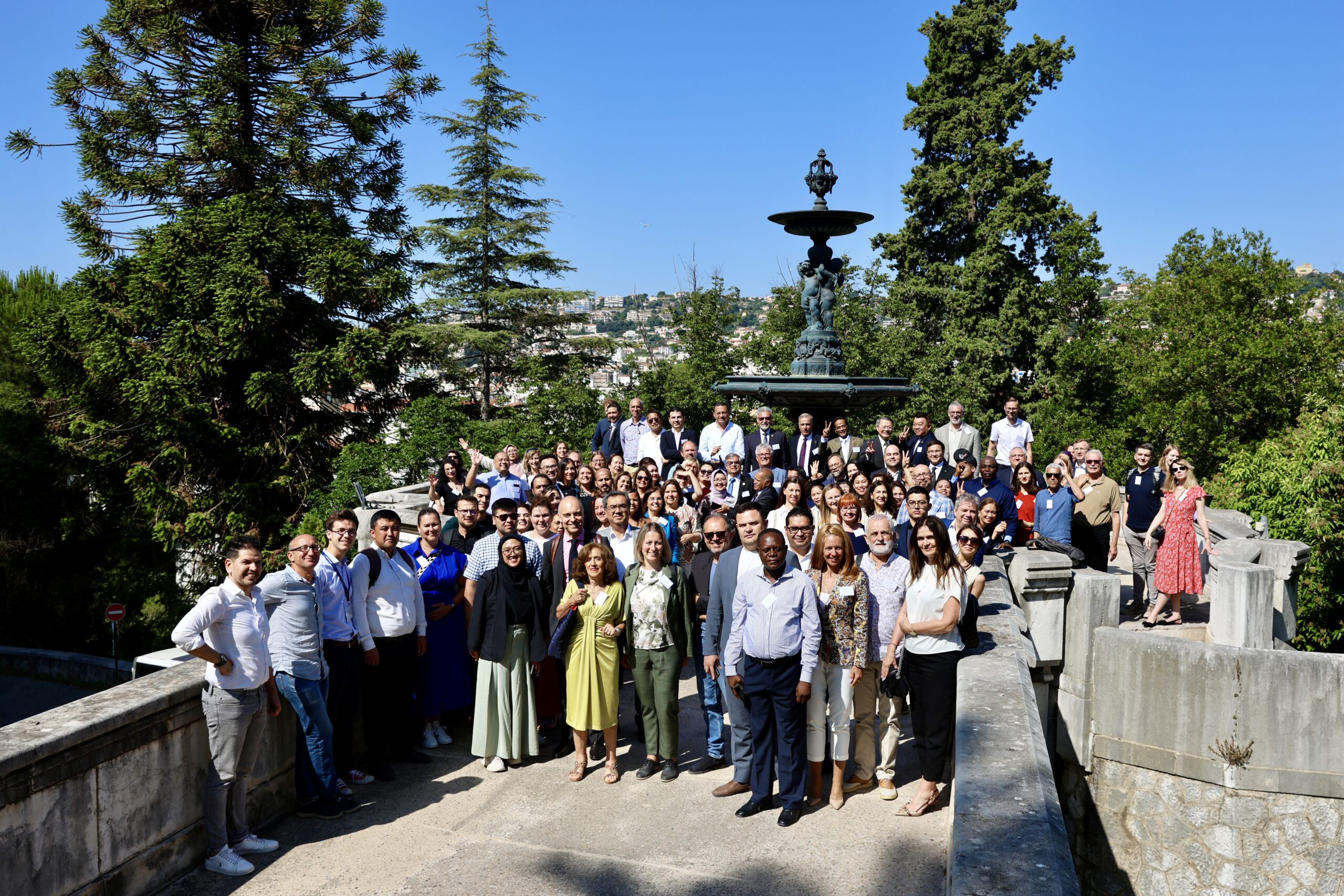
The 11th International Workshop on UI GreenMetric World University Rankings was successfully held from 17 to 20 June 2025 in the scenic city of Nice, France, hosted by Université Côte d’Azur. As one of the flagship annual events of UI GreenMetric, the workshop continues to serve as a vital platform for advancing sustainability in higher education worldwide.
This year’s theme, “Doing Sustainable Development Goals in Higher Education: The Story of Our Institution and Society,” brought together university rectors, institutional leaders, and sustainability experts to share inspiring stories of how their campuses are actively contributing to the United Nations Sustainable Development Goals (SDGs).
Set against the stunning backdrop of Nice’s Mediterranean landscape, the workshop welcomed nearly 140 participants from across the globe. Over four days, the event featured presentations, panel discussions, and interactive sessions focused on the six core criteria of the UI GreenMetric methodology: Setting and Infrastructure, Energy and Climate Change, Waste, Water, Transportation, and Education and Research.
The workshop opened with a warm welcome from Prof. Jeanick Brisswalter, President of Université Côte d’Azur, who emphasized the university’s deep commitment to sustainability and international collaboration. He was joined by HE Mohamad Oemar, Ambassador of the Republic of Indonesia to France, Andorra, and Monaco, and to UNESCO, who underscored the importance of shared global responsibility in addressing environmental challenges.
Also delivering opening remarks were Prof. Riri Fitri Sari, Chairperson of UI GreenMetric World University Rankings, whose visionary leadership has guided the initiative since its inception, and Prof. Erwin Franquet, Vice-President for Sustainable Development at Université Côte d’Azur, who welcomed attendees with enthusiasm and optimism for the days ahead.
The first day featured a compelling keynote by Emily Stott, Nature Positive Universities Coordinator at the University of Oxford, who introduced the concept of "nature-positive universities" and highlighted the urgent need for biodiversity awareness in higher education.
On the second day, participants were welcomed by Stéphane Mazevet, Director of the Côte d’Azur Observatory, setting the stage for two insightful keynotes. Cécile Sabourault, Vice-President for International Affairs at Université Côte d’Azur, explored the university’s role in marine protection with her talk, “The Role of Universities in Protecting the Sea: From Local to Global.” This was followed by Prof. Erwin Franquet, who shared the university’s efforts in embedding sustainable practices into long-term institutional planning.
Participants shared innovative practices, institutional successes, and actionable strategies for building greener campuses and fostering sustainability-minded communities. From energy-efficient buildings and green mobility solutions to research integration and sustainability education, the discussions reflected a growing commitment across institutions.
The sessions featured diverse perspectives, including student-driven initiatives, policy alignment with sustainability metrics, the role of infrastructure and planning, evolving literacy around sustainable consumption, and emerging efforts to monitor academic-related emissions—demonstrating the richness and depth of approaches being undertaken globally.
A momentous highlight of the event was the signing of a declaration of membership from 10 uniersities, marking the continued expansion of the global academic community committed to working together for sustainability in higher education. Some of the universities that signed the declaration include:
1. Université de Kikwit, Democratic Republic of the Congo
2. Beirut Arab University, Lebanon
3. University of Tuzla, Bosnia and Herzegovina
4. Shakhrisabz State Pedagogical Institute, Uzbekistan
5. Lazarski University, Poland
6. Instituto Superior de Engenharia de Lisboa, Portugal
7. Payap University, Thailand
8. Universitas Negeri Jakarta, Indonesia
9. Shaqra University, Saudi Arabia
10. Universidad Técnica de Ambato, Ecuador
This symbolic act represents a shared pledge to foster sustainable development through education, research, and collaboration.
The workshop also reinforced the importance of collaboration and mutual learning, as universities continue to serve as hubs for innovation and societal transformation. Université Côte d’Azur’s vibrant academic setting and steadfast commitment to sustainability made it a fitting and gracious host for this year’s landmark event, further solidifying its leadership in the global sustainability agenda in higher education.
As the 11th edition concludes, the workshop leaves behind a renewed sense of purpose and a strengthened network of institutions dedicated to building a more sustainable future. The UI GreenMetric community looks forward to continuing this journey together — working locally, impacting globally.
We are delighted to share that the 12th International Workshop on UI GreenMetric (IWGM) will be hosted by Adam Mickiewicz University in Poznań, Poland, in 2026. We look forward to welcoming new and returning participants to continue building on this momentum toward a greener, more sustainable global higher education community.
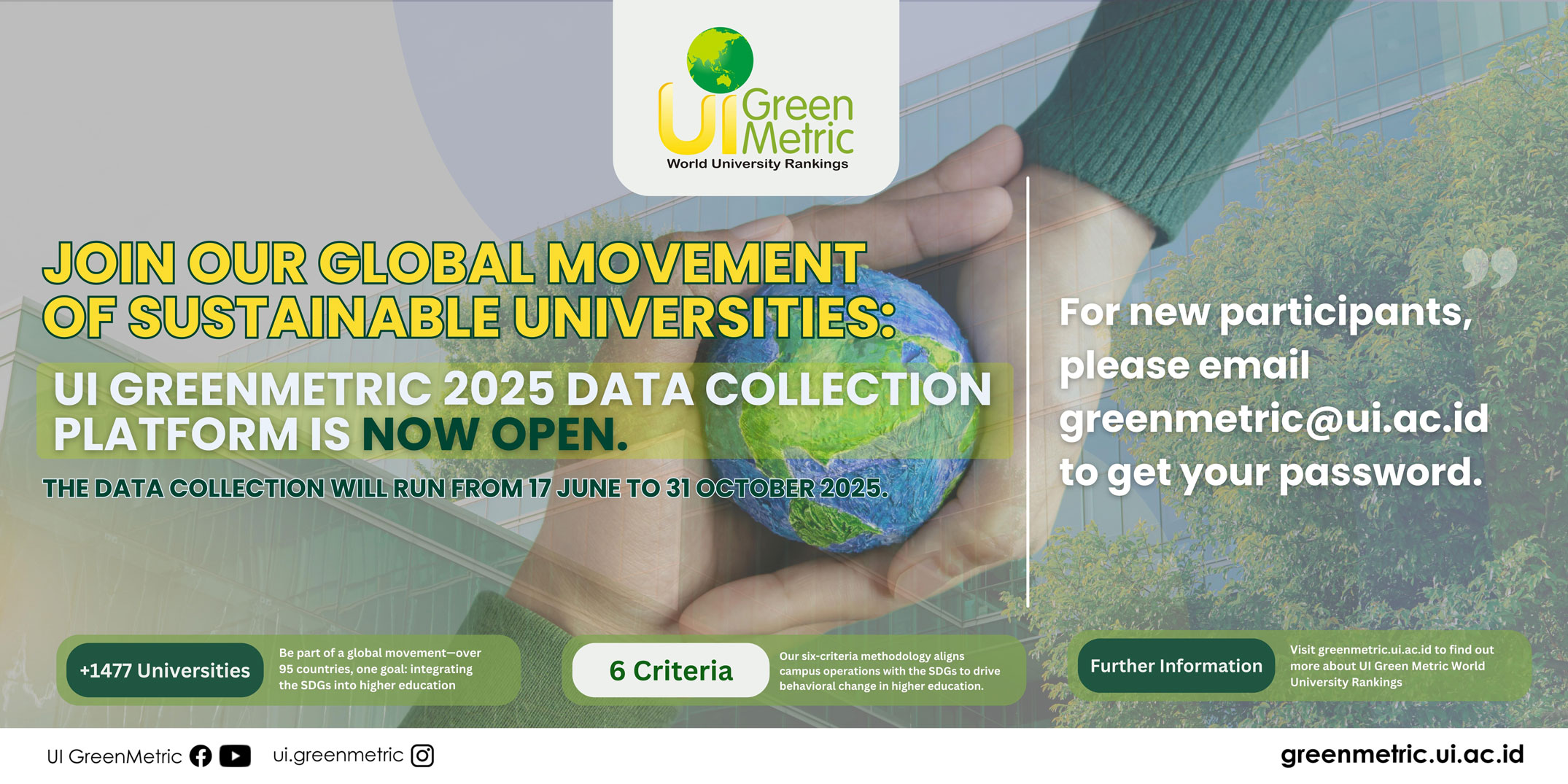
We are also pleased to announce that the UI GreenMetric 2025 questionnaire is now open, and universities around the world are invited to submit their data to participate in this year’s ranking. For institutions considering participation for the first time, UI GreenMetric offers guidance and is available for consultation — whether to support the data submission process or to assist in enhancing campus sustainability efforts. Please feel free to reach out via email for further assistance.
To learn more about how to get involved, visit: www.greenmetric.ui.ac.id.
Written by Riska P. Hariyadi - Communication Specialist UI GreenMetric
Galleries
Documentation from Université Côte d’Azur